Changing landscapes with the MAT Network
Those of us who translate for a living know all too well how the translation landscape is evolving. But the specialist spheres we work in are changing too, giving rise to new challenges and opportunities for linguists. The world of museums and art is no exception – and that was at the heart of the ITI Media, Arts and Tourism network’s event on ‘Translating for contemporary museums: new media, new challenges’, held in Glasgow in September.
Where better to immerse ourselves in the intricacies of museum translation than in an actual museum? In this case, the Burrell Collection – an eclectic array of objects collected by philanthropist William Burrell, housed in an award-winning building amongst the trees in one of Glasgow’s leafy parks. The architecture was virtually an exhibit in itself – and luckily for us, ITI CEO and architect Sara Robertson was on hand to give us an impromptu overview of the history of its design.
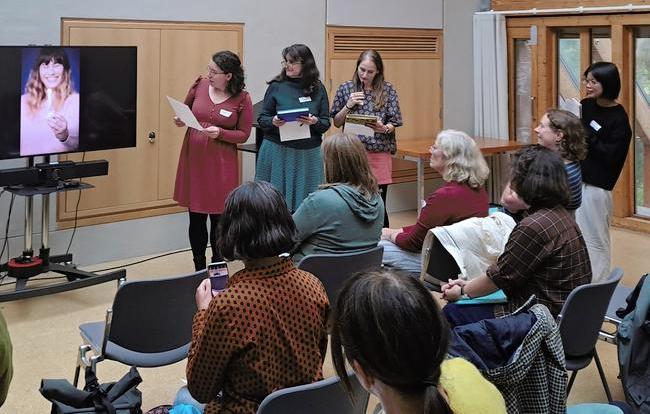
Before we were let loose to look around the museum, we were treated to three insightful talks. First up were Elena Zini and Mark Bradshaw from Screen Language – audiovisual translation specialists from Edinburgh – who talked us through the process of creating multilingual multimedia content (from translation to subtitles, voiceovers and BSL) for the very museum we were sitting in. We even had a go at producing our own subtitles for video snippets (I was in the German group for this – trying to distil the concept of traditional Swedish “apostle spoons” into concise German sentences was definitely a challenge!).
Our next speaker, Alicja Tokarska, picked up the thread of multimedia language services in her own talk on ‘Museum translation today’. Drawing on her experiences of working in this field, she got us thinking about the variety of projects this can involve, what kind of clients are out there, and what adjacent services – such as inclusion/diversity audits or plain language editing – we could consider branching out into. She also highlighted some hot topics in the museum world, including inclusivity campaigns and efforts to decolonise collections.
Last but by no means least, Louise Rogers Lalaurie stepped up to shed light on two decades of translating for museums and art galleries, focusing on ‘evolving media’ (definitely a common thread running through the day) and ‘perennial challenges’. With great humour and tact, Louise detailed some of the scenarios she has faced when translating for French art and cultural institutions – highlighting the diplomatic skills often required to balance the needs of end users with the egos of highly erudite authors! She also talked about the differences in cultural and political norms when it comes to museums. While institutions in the UK are moving more towards accessible, plain-language offerings, this isn’t necessarily the case (yet) in France or elsewhere, which creates another cultural gap for we linguists to bridge.
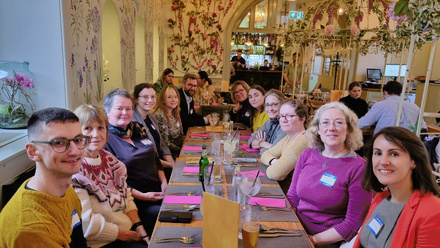
After wrapping up, all that learning and exploring had inevitably made us hungry, so we met up again in the evening for a communal feast of South Indian food and chatted away about our day as we all overdosed on dosa – a cultural experience in itself!
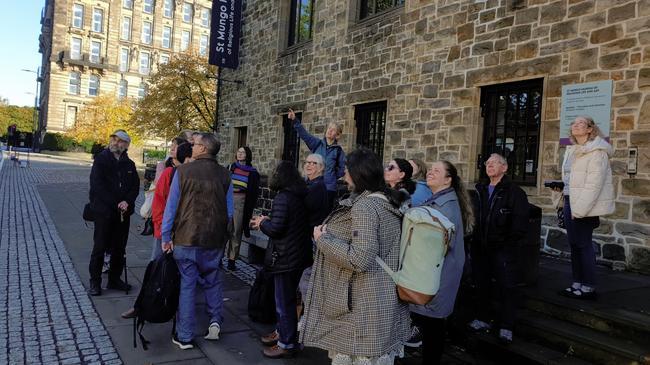
And as if a full day of indulging our love of heritage content wasn’t enough, Sara Robertson swept in again the following morning to take us on an architectural tour of Glasgow, chronicling its history through buildings and street art – from archetypal rendered (or ‘plaistered’) facades and crow-stepped (‘corbie-stepped’) gables to more recent innovations – and throwing in lots of Scottish terms along the way!