Why does multilingual communication matter now more than ever?
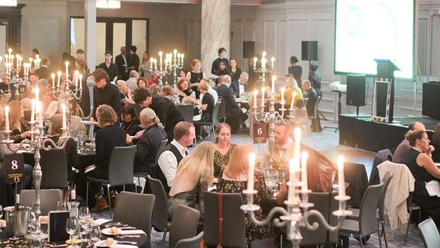
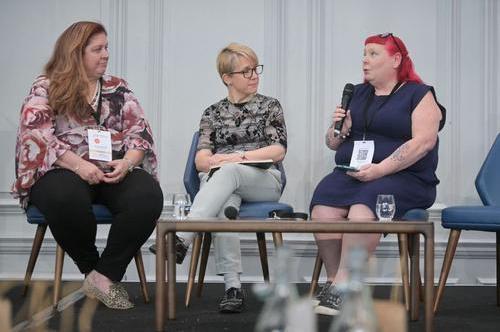
This presentation was delivered as part of the LEGACY: Industry voices panel, which took place during the ATC Gold conference in Glasgow.
We are in an era of unprecedented global movement, influenced by climate change, conflict and human rights violations resulting in people being forcibly displaced to seek safety and the world being more connected due to global events.
Glasgow is a city built on migration and has been from the early 1800’s. Our multiculturalism has been greatly enhanced by 25 years of welcoming people seeking asylum, and for many years being the only local authority in Scotland to open its doors. Diversity enhances our city greatly.
At least 160 languages (not counting Glaswegian!) are spoken in Glasgow, with many of those being lesser-known community languages for smaller diasporas. Voiceover Interpreting specialises in supporting language needs in those smaller known languages, along with supporting more mainstream languages.
For those arriving in a new country, often in situations where they had no control over their destination, culturally competent language services are a crucial lifeline to enable people to access the support they need. Purchasers want cost efficiency and responsiveness. What members of our community in need of language support need is trust, expertise and understanding which goes beyond only words.
For the marginalised communities we serve, having confidence that non-westernised community cultural nuances are understood takes language support from words based to person centered and humanity based which can be life changing for those who rely on language support to navigate hostile and dehumanising systems.
This is why Govan Community Project established our community interpreting service Voiceover.
Many of our interpreters have lived experience and even those who don’t are part of local communities, which informs their professional practice to be both trauma and culturally informed, giving those receiving language support a sense of really being heard and understood, be that through dialogue or other communications.
The Glasgow motto is “Let Glasgow Flourish” and never has it been more important for language support to be culturally competent. A deeper understanding of cultural diversity does not have a price on it and makes the real change from supporting individuals to survive to empowering people to build resilience, make community connections and thrive.
Where there are challenges is the lack of understanding of real cultural diversity beyond the spoken word with purchasers which can significantly impact on that 3-way relationship and levels of engagement. Language support needs to be seen through a different lens by purchasers as a lifeline for those who need it and not just a transactional afterthought.
Crucially, how we deliver these services matters just as much as providing them. Having a service whose pool of interpreters are uk based or from the migrant community ensures they are aware of local vernaculars and systems terminology but also that deeper understanding of non-verbal language cues.
Using local community-based services also contributes to a circular economy where revenue generated from providing professional interpreting and translation services to public and commercial clients goes straight back into funding local social impact.
Language support should be seen and delivered through a social impact lens and not as a transactional, add on service.
In the current political landscape of hate and division, language support is more crucial than ever and when delivered through a community-based framework, such as Voiceover, the support provided doesn't just enable communication—it actively facilitates individual resilience and agency, community cohesion and social justice.
The legacy we would love to see in the future is that the language industry moves away from being a purely transactional, extractive commercial model to a model that values linguists, pays fair wages and reinvests in the communities it serves.
Access to ethical, culturally competent language support should be seen not as an add on service but as a fundamental human right.