Reflections on EX:CHANGE 2026
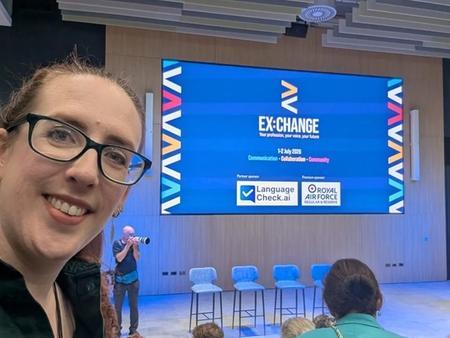
At the start of July, I attended the new-format ITI conference to celebrate the Institute’s 40th anniversary. It was my third ITI conference and I was excited to meet up with colleagues, take the pulse of the profession at this difficult time and see what the new format had to offer.
Unlike previous ITI conferences, EX:CHANGE 2026 had no streams. Everyone started out in the auditorium for a keynote and/or panel, before moving to a more informal discussion room. There we sat at tables of 8-10 to discuss the issues raised. Discussions were recorded – I would argue not very successfully – on Padlet boards and summarised – somewhat more successfully – by table facilitators at the end of each session. I’ll summarise some of the more notable points raised below, but overall it’s safe to say that these discussion sessions were the highlight of the conference for me.
Session 1: Ethics
Panel: James Brown, Comtex; Félix do Carmo, University of Surrey; JC Penet, Newcastle University; David Stockings MITI, Better Worlds Translation/UCL.
Though the discussions on ethics were extremely broad, the panel focused on sustainability and AI. Félix Do Carmo posed some interesting questions about the inherent good of translation and whether that includes AI-generated translation. David Stockings earned a heartfelt applause from the audience for his stance against AI: “I’m sick of being told it’s inevitable.”
My only concern with this panel was its lack of diversity. A panel of white men talking to/on behalf of an international profession dominated by women caught my attention and not in a good way. The lack of diversity within the ITI also came up in discussion with a colleague at the gala dinner event. We noted that the ITI membership and networks are dominated by European languages, despite the high number of UK-based translators and interpreters working with non-European languages. Perhaps there is an ethical imperative for the ITI to do more to attract a more diverse membership.
Ethics-related topics discussed at our table included rates, particularly for court interpreters (see PI4J), the situation of conflict interpreters (see Red T) and whether we are responsible for the content we agree to translate.
We did of course discuss the myriad ethical problems with AI: environmental harms, social harms (including job losses and job (dis)satisfaction), economic harms and rampant IP theft. We considered where the line is if translation is needed in high-stakes situations and only AI translation is available. One participant compared the rapid rise of AI to the industrial revolution. I compared it to the closure of coal mines and the lasting effects on mine-reliant communities. The point was made that these things were inevitable. I made the counterpoint that we are well aware of the lasting negative effects of both these events on communities (mainly on those not in positions of power), due in part to how poorly they were handled by government. I would argue that with this history in mind, our legislators should be stepping up and doing better, rather than just letting these harms happen.
Session 2: Entrepreneurship
Keynote: Dr Sonia Koller, Lecturer in Entrepreneurship/Innovation, KCL
Panel: Oliver Dean, Syrup; Dr Sonia Koller, KCL; Debbie Lewis, NatWest Accelerator; Teemu Purmonen, Youpret; John Conroy, Collection Success
In her keynote talk Dr Koller spoke about the meaning of entrepreneurship and how we should all see ourselves as business owners. Given her audience, this was rather preaching to choir. In response to the AI issue, she suggested that translators could either “wait and see” or proactively shape our profession.
For a proactive approach, she presented the ARTS method (act, resources, test, surprises). Essentially, we should know our affordable loss (how much we can afford to lose if things don’t work) and use this money to test out ways of doing things differently. We should expect at least some of these tests to fail. For me this framing was really helpful. If I have budgeted for possibly losing the money and time I put into something, I feel freer to try out things I may have felt were too risky before.
Dr Koller reminded us to draw on the resources we already have: who we know, what we know and who we are. She encouraged us to seek solutions with clients, to make our offer more relevant and get early buy in. Finally, she challenged us to think of one small action we could take to start the process.
I have mixed feelings about this keynote. The framing of translators as entrepreneurs felt obvious to me and I thought some of the analogies didn’t make sense. The parts I found most useful concerned challenging ourselves to try new things in a way that feels safer to us.
The panel (though a strange mix of business people and coaches) also had some useful advice. Debbie from NatWest accelerator urged us to make sure everyone we know can explain what we do to anyone else. This means polishing up the dreaded elevator pitch. Teemu advised working with people who are different from you, who can do the things you can’t. Oliver advised failing fast and moving on to find what works for your business. All panelists agreed on the need to build connections with people and listen to them, rather than going straight for a sale.
At our table, the discussions for this session focused on how we might invest in trialling new things for our businesses and how to expand our networks. We talked about the need, now more than ever, to be human and distinctive, while making sure we are spending time in our clients’ worlds.
We talked about the stories we tell about ourselves to others and to ourselves. For me, this meant recognising that it’s okay that I couldn’t keep going at the rate I had been considering the wider context and personal challenges. At the end of the session, literally on the way out of the door, a colleague who attended my respectful language training session encouraged me to take the training to companies, because she thought they would find it valuable.
My three main actions following this sessions were to talk to corporate clients who might be interested in my respectful language training (my risky-feeling thing), to join ASETRAD to build my networks in Spain, and to give myself some grace.
Session 3: Engaging clients
The final session started with a conversation between ITI Chair Fiona Gray and ATA President Andy Benzo, who talked about how the two professional associations have been working together. They focused on a positive message of community and resilience.
Panel: Jacqui Gratton, Freedom from Torture; Samuel Läubli, Supertext; Jennifer Vela Valido, Spoitfy; Isabel Teodoro, TrustPilot
This panel was supposed to represent translation buyers and give us insight into their thought processes. While it did do that to some extent, unfortunately the majority of the panelists operate at the bulk end of the market, where translators are treated like soulless resources and tech is used to push down rates and worsen working conditions. As always, the budget defence was used and the buck passed to senior management.
Despite my disappointment about the types of clients represented on the panel, they did share a few interesting ideas. TrustPilot uses a matrix with their internal clients to determine their approach to translation. The higher the risk, the more important the content, the more likely they are to use specific translators. Low risk, low importance tasks are left to AI/MT. Sam from Supertext highlighted clients’ positive response to discussions about data sovereignty and risk. Isabel from TrustPilot also noted the limitations of AI and the expense of trying to make it do too much (follow style guides, maintain tone of voice, etc.).
I often got the impression that the panelists didn’t properly understand their audience or fully recognise the experience and competence of the people in the room (at times to the point of being insulting). The vast majority of us do understand how to talk to clients about AI without shutting down the conversation. How we talk to each other about AI, does not reflect how we talk to clients.
The final session ended with a keynote by Dr Christophe Fricker on our relationships with our clients. He recognised that we are experiencing an unprecedented rate of change in our profession and the world at large. But, he says, AI is not a new revolution. He challenged us to embrace our agency and our humanity, arguing that we can stand out as freelancers in a sea of AI and agencies that operate like a slower, more expensive version of AI.
This keynote was inspiring in that it encouraged us to cut through the AI noise with our human voices, to make genuine connections with clients and colleagues, and to build trust as the foundation of what we do. Christophe argued that people cannot trust AI, because trust is interpersonal. He challenged us to start conversations with people not like us, with people who may not like us and with people with different expertise. Specifically, ten conversations with ten people each.
This approach to client engagement speaks to me because I am, in general, quite a sociable person. The idea of building trust with people, including potential clients, appeals to me and, whether or not it leads to floods of new work, I’m sure it will make my client acquisition efforts much more enjoyable.
The discussions on this session were animated to say the least. There was a level of anger at the “translation buyers” chosen for the panel and many around the table openly rejected the faceless, impersonal processes they represent. We talked about the role of our professional associations in advocating for our working conditions and the value of the services we provide. The Chair of ASETRAD was at our table and talked about the Spanish professional association’s advocacy efforts. Associations do, it was agreed, have much more clout with the C-suite of companies, organisations and government, than individual translators. (As an aside, engaging with clients is one of our priorities within the ITI International Development and Cooperation Network.)
Given the pervasive AI-induced doom and gloom in the profession at the moment, the participants at our table agreed that we need to make sure to share our successes, including clients coming back after experimenting with AI and those who value on quality.
Final keynote and conference close
In his keynote on ethical, entrepreneurial and engagement-driven success, Joachim Lépine acknowledged the very real effects of the disruption of our profession on our mental and physical health. He pointed out that the rapid disappearance of the “low-hanging fruit” of translation has led to stress for many colleagues and persistent nervous system dysregulation. This situation isn’t something we should try to ignore. I myself have felt this stress.
In response, Joachim urges us to stop ignoring AI, stop letting other people decide the tech we use, stop competing on speed and scale, and stop lowering our rates in response to AI. Instead we should be meeting clients (in person) and engaging with them. We should all have a robust AI usage policy. We should offer our clients solutions and options.
He focused on the need for our authenticity and integrity to cut through the AI white noise. The advice to offer clients sincere praise is something I’ve been doing for a while. Other ideas that I would like to follow up on include having lunch with a potential client and partnering up with people who offer other services. These are both nice ideas, and perhaps I can use some of that investment money mentioned earlier to put them into practice.
I was pleased to note Joachim’s use of the phrase “generated by AI” (as opposed to “written by AI”). I believe the language we use shapes our understanding of the world and it is important to remember that there is no creative intention behind AI. AI runs on sophisticated probability-driven systems built on the theft of other people’s creativity.
Gala dinner and awards
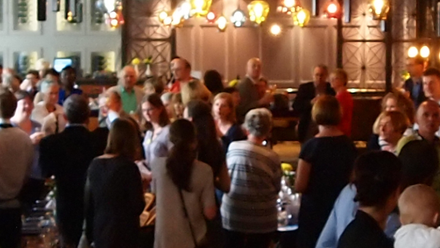
The gala dinner was a celebration of 40 years of the ITI. The venue was lovely (and super close to my hotel) and the food and entertainment were great. I loved chatting with colleagues and dancing the night away. But my highlight of the evening was being awarded a Chair pin by ITI Chair Fiona Gray for contribution to the profession. I was not expecting it at all and feel honoured to be recognised. Thank you Fiona!
Social and networking
One of the best things about attending an in-person conference is the opportunity to catch up with colleagues. It was a joy to chat to people I have know for many years, but rarely get to see in person. Although I’m an active participant in online translation spaces, meeting with colleagues in person really helps to build stronger relationships. I also value the opportunity to meet new colleagues, who might not frequent the same online spaces as me.
Overall reflections
Some colleagues were put off by the new “unconference”-inspired format of the event, especially in combination with its high cost. However, what I enjoyed most – and got the most out of – at previous conferences were the discussions with colleagues in the breaks. The 2026 iteration’s focus on exchange (unsurprisingly then) appealed to me.
Given this simplified format, with presumably lower speaker costs, the cost of the event did seem high (particularly when combined with travel and accommodation expenses). It is also undeniable that the cost of the conference affected who chose to attend. It was hard not to notice the dearth of newer professionals and those who are perhaps struggling (even) more than me. Having been an active ITI Member/Associate for over 14 years, I recognised (and was delighted to catch up with) many well-established colleagues, despite the conference feeling smaller than previous years.
This bias towards the more established end of the profession may also have contributed to the tenor of the discussions. We all had strong opinions and the knowledge, experience and confidence to back them up. Everyone I spoke to was keen to interrogate points, play devils advocate and consider different perspectives. Yet it was clear we were all coming from a more or less similar position of valuing our profession and our professional integrity, while remaining unimpressed by the promises and dubious ethics of AI.
Improvements could certainly be made to the discussion sessions. In our first session, on ethics, one participant monopolised much of the discussion time at the start. It wasn’t entirely clear who our facilitator was and the panelists rotating around the room disrupted the discussions. I think this switching and a lack of familiarity with the participants meant the facilitator struggled to guide the discussions effectively. Fortunately, we were able to hear (almost) everyone’s perspective and have fruitful discussions (more detail below).
The second discussion session was much more balanced and I think having a clear facilitator helped. In the last session of the day we were left facilitatorless and I was appointed – read press-ganged – into the role. I knew many of my colleagues around the table fairly well, so I felt comfortable keeping the discussion on track (looking at you Mr Appleyard). Appointing longstanding members as discussion facilitators, while have a longer Q&A for the panels, might be a better way to go for future conferences.
For me EX:CHANGE 2026 was well worth attending. For the inspiration it offered, for the chance to meet up with colleagues and for the sense of community that brings. While I would have liked to come away with a more concrete understanding of what ITI is doing to advocate for our profession, I do have quite the to-do list. I hope that putting these ideas into practice will increase my enjoyment of my business as a whole (at the moment I kind of resent many of the parts that aren’t client or association work).
Reproduced from the original blog with kind permission from Holly-Anne White, Whyte Language Services - Reflections: ITI EX:CHANGE 2026 - Whyte Language Services