Meet the Committee Chairs
ITI's committees do much of the detailed work that shapes the Institute, from professional development and membership to conduct and governance. Each is led by a volunteer chair who gives their time and expertise for the benefit of members. In this feature, we introduce the chairs of five of those committees and ask them about their careers, their committees and what they hope to achieve.
Kim Sanderson, chair of the Fellowship Committee

Tell us a little about your background.
Two languages I know a little but don't work with are Kiswahili and Italian. I learned Swahili because my secondary school had a youth exchange with a school in Tanzania. Later, I took evening classes in Italian, which led to my best-ever GCSE grade. The background to the languages I work with is more conventional: I learned French and German at school and university.
What are you proudest of in your career?
Like many of my colleagues, I don't find it natural to stand back and highlight my own achievements. I'm more often proud of what colleagues have achieved. That's where ITI comes in: it helped me out by recognising a long book translation I did. I'm also proud to have taken on many different roles over my career, from translating to teaching translation, and even managing interpreter bookings centrally for several government departments.
What one piece of advice would you give members?
Everyone has a different path to success, but being part of ITI and its networks is a great way to share successes and tips with others. ITI also provides stepping stones towards career progression, if you choose to follow that path.
What does your committee do, and why does it matter to members?
The Fellowship Committee receives, reads, discusses and approves applications for Fellow status. Because we know the process well, we can advise members on how to work towards becoming a Fellow, and how to document work they've already done that will count towards Fellowship.
Why did you apply for the role of chair?
I'm happy to be working with, for and on behalf of other Fellows of the Institute. Beyond that, there's no exciting story to tell: I was already on the committee when the previous chair stepped down, and I put myself forward.
What do you hope to achieve as chair?
Building on the committee's work in recent years, I want to help people within ITI understand what a Fellow is. That should in turn help MITIs know how and why to apply for Fellowship.
The other key question is how Fellows fit into ITI as a whole. Fellows have significant experience of the profession and its place in the world, so we are well placed to advise or be consulted on issues as they arise. If ITI has an institutional memory, its longest-serving members, including Fellows, are its custodians. The challenge is not just to keep that memory as an archive, but to use it, pass it on and give other professionals access to it.
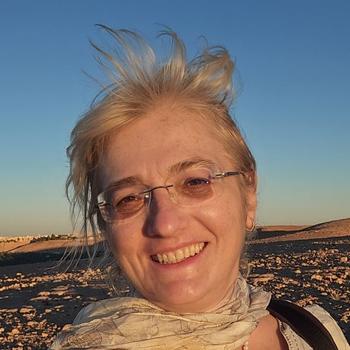
Dana Szabados, chair of the Membership Committee
Tell us a little about your background.
I'm a mechanical engineer by training and spent more than two decades working in quality and environmental management in the chemical and petrochemical industry. Today I'm a full-time freelance translator, working from English, French and German into Romanian. I enjoy the freedom of working from airports, hotels, beaches and mountain huts – wherever there's an internet connection.
What are you proudest of in your career?
My volunteering. When I started out 30 years ago, I would have needed the kind of support I'm now trying to give back to the community. As well as ITI, I volunteer for Women in Localization Germany and the Romanian Standardisation Association.
What one piece of advice would you give members?
Get involved in ITI's initiatives, networks and committees, and go to events outside the translation industry too. Personal success doesn't simply come to us – we have to work for it.
What does your committee do, and why does it matter to members?
The Membership Committee looks at everything to do with attracting new members, keeping current members engaged and reducing the number who leave. We review areas such as membership categories, entry requirements and the assessment process for Qualified Membership, keep an eye on sector trends and recommend improvements to the Board.
Why did you apply for the role of chair?
Building communities that people want to be part of is something I already do outside translation, and I wanted to bring that experience to ITI. My earlier career in quality and environmental management also means I tend to look closely at what is actually working, and turn that into practical recommendations rather than general observations.
What do you hope to achieve as chair?
I'd like to focus on retention and involvement: understanding not just why members join, but why they stay active. I also want to build better two-way communication with members, so that the committee doesn't just review the numbers but hears directly from people about what keeps them engaged. I want the recommendations we bring to the Board to reflect that.
Dean Evans, chair of the Nominations Committee

Tell us a little about your background.
I'm a northerner now based in Kent, and I came to translation from a classic languages background. After a BA at Newcastle, I spent a couple of years teaching English in rural Spain (¡Teruel existe!) and then working in retail, before doing my MA at Leeds in 2012–13. I was lucky to get an in-house role straight afterwards, where I worked for three years, followed by a year in Luxembourg. I went freelance in December 2017.
What are you proudest of in your career?
ITI has been central to my freelance career from the start. I was very pleased, and surprised, to be asked to join the Professional Development Committee and the French Network committee in 2019. But my proudest moment has to be my election to the Board in 2024. I was honoured and humbled that colleagues felt they could trust me to help run our Institute.
What one piece of advice would you give members?
I think success comes from constant learning combined with a strong network of colleagues. So my advice – two pieces, I'm afraid – is to keep honing your skills, and to get out there, make friends and, importantly, talk about what you actually do, or want to do.
What does your committee do, and why does it matter to members?
The Nominations Committee has two main roles: identifying potential candidates for the ITI Board elections and encouraging them to stand, and recruiting the chairs and members of ITI committees. Our work helps make sure ITI is run by an effective Board that represents its membership, and that its committees bring a broad range of member experience and expertise to ITI's strategy, for the benefit of all members.
Why did you take on the role of chair, and what do you hope to achieve?
I'd seen first-hand on the Professional Development Committee how ITI committees can help inform ITI's strategy. I wanted to help keep that going, while making sure that as many members as possible, from as many backgrounds as possible, have the chance to get involved. ITI needs a diverse range of voices on its Board and committees to ensure good governance now and in the future, and that is at the heart of the Nominations Committee's work.
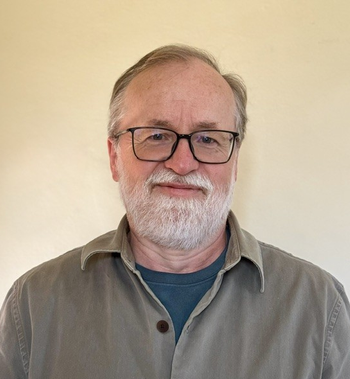
Paul Ryan, chair of the Professional Conduct Committee
Tell us a little about your background.
I studied Hispanic Languages and Literature at St Andrews before the release of Windows 1.0, then became a lawyer and worked in the legal profession for about 20 years, including secondments to Guinness and the Treasury. I was a partner at Herbert Smith, as it then was, working on long-term projects and project finance. After some years as a homemaker, I took an MA in Applied Translation at UEA, and I have been translating since 2017.
What are you proudest of in your career?
Founding the ITI Neurodiversity Network with Gill Hughes and Carola Lange.
What does your committee do, and why does it matter to members?
The Professional Conduct Committee handles issues relating to the conduct of members and ITI's Code of Ethics.
Why did you apply for the role of chair?
My background in the legal profession seemed a good fit.
What do you hope to achieve as chair?
I would like the committee to reach pragmatic decisions that are fair to all members, and to anyone who has raised an issue that affects them.
Jo Durning, chair of the Professional Development Committee
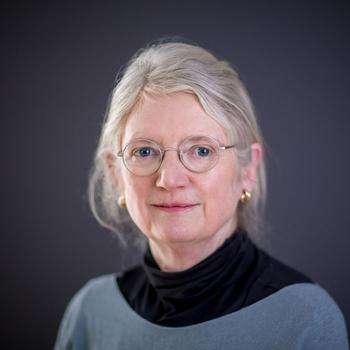
Tell us a little about your background.
Translation is my retirement job, after 30 years in the UK civil service. I don't have a degree in French, but early in my career I spent nearly a year on secondment to the European Commission, at a time when French was very much its working language. I also worked for four years at the British Embassy in Paris.
The highlight of my civil service career was working in the Cabinet secretariat in the 1990s. As a policy expert, I needed to get to grips quickly with complex issues and the terminology that went with them – skills that have stood me in good stead in my new career.
What are you proudest of in your career?
That's a difficult question. Like many linguists, I'm a perfectionist and can't look at any of my work without seeing how it could have been better. But I am proud to have helped other translators improve their skills, particularly when teaching a DipTrans preparation course.
What one piece of advice would you give members?
Focus on your clients. Keep in touch with them and understand what they need. And, of course, keep up your own professional development.
What does your committee do, and why does it matter to members?
The Professional Development Committee is where professional development experts meet translators and interpreters. We work together to shape a training programme that meets members' needs.
Why did you apply for the role of chair?
The committee had done a great job of embedding CPD in ITI's culture, but the chair and several members were moving on and it was time for a change. I wanted to help the committee take a more strategic role, and my background puts me in a good position to do that.
What do you hope to achieve as chair?
I'm coming to the end of my second year as chair. The committee has drawn up a professional development strategy and a professional practice framework, both approved by the Board, and we're about to publish the framework and guidance. I now want us to focus on embedding them in ITI's culture, while continuing to give the staff team plenty of practical ideas for the professional development programme.