More than rules: re-writing ITI's code of professional conduct
In October, ITI members voted to approve a revised Code of Professional Conduct. This wasn't simply an update of a decade-old document; we invested a lot of time in fundamentally rethinking our approach, based on our contemporary understanding of how professional standards can support translators and interpreters in an evolving industry.
Why professional standards matter
Some might ask whether codes of conduct actually make a difference. As a former chartered architect and member of the RIBA I believe that such codes do play an important role in supporting high standards of professional behaviour, but not in the way you might assume. In my view the value of a code of professional conduct doesn’t lie in its functional role as a disciplinary tool that can be used to address serious professional misconduct. The real value lies in establishing shared expectations, building trust and promoting professionalism.
For clients, adherence to ITI’s Code of Professional Conduct signals that our members operate within a defined professional framework. It gives clients confidence that our members understand their obligations around confidentiality, competence, and contractual good practice etc. When a translator or interpreter references the code in discussions with clients, they're demonstrating their professional accountability.
For members, the code provides clarity in difficult situations. It supports practitioners when they need to decline inappropriate work, push back on unreasonable demands, or explain why certain ways of working are necessary. It has value as a reference point for professional decision-making.
For the profession as a whole, codes and standards help distinguish highly trained and experienced language practitioners from casual or amateur workers. They demonstrate that translation and interpreting are skilled professions with recognised competencies, not just services that anyone with language skills can provide. Codes can also support arguments for fair remuneration and proper working conditions.
For stakeholders, a code of professional conduct demonstrates the seriousness with which the translation and interpreting profession approaches questions of standards and ethics. This serves to underscore the values that we espouse as a profession and demonstrates our value to business and society.
A collaborative process
When the Board recognised that our existing code needed revision, we established a task and finish group to guide the project, a process that ran in parallel with our work towards establishing a code of ethics. The task and finish group drew upon the expertise of practitioners and academics, and also benefitted from the external perspective of Peter Hinton, former CEO of the Chartered Institute for Archaeologists. Over a series of discussion sessions, the group made a strong case that the new code should be more accessible, less prescriptive, and more aligned with contemporary practice. They wanted a code that incorporated established principles but also responded to emerging challenges. And they placed more emphasis on the central role of professional judgement, rather than just asking practitioners to follow rigid rules.
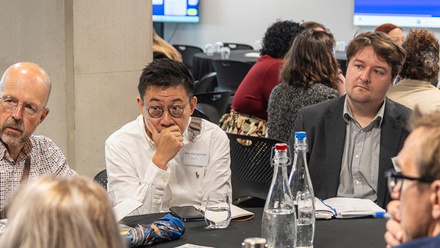
We shared the near-final draft of the Code of Professional Conduct with a wider group of stakeholders at one of our Coffee House sessions and then we completed the consultation process by using the Voxiberate deliberative democracy platform to gather member input on contentious issues. At all times we sought genuine engagement with the questions that matter to professional translators and interpreters.
A streamlined approach
The revised code moves from four principles to three: professional values, professional competence, and professional business practices. We've also removed prescriptive elements that didn't belong in a code of conduct. The aim was to create a code that sets clear expectations without attempting to regulate every aspect of practice.
New elements have been introduced where appropriate. For example, we've included explicit guidance on technology use – a necessity given the rapid evolution of machine translation and generative AI. The task and finish group was also keen to include a section on wellbeing and self-care, recognising that sustainable professional practice depends on practitioners looking after themselves. However, when this suggestion was put to members during the consultation the majority view was that while well-being is an important issue it was better addressed through guidance and other types of support.
Using the code
Revising and publishing the new code is not the end of the process. The next step is to help professional translators and interpreters incorporate the code into their daily practice. So, I'd encourage members and other stakeholders to read our new code and consider how it relates to their work. Think about how you could use it in conversations with clients, or how it might support your decisions about which projects to accept or not. We will also begin creating new resources, such as case studies and examples that show how the principles apply in real situations, to offer further support and guidance.
Looking ahead
Leading the work to revise our Code of Professional Conduct has been a fascinating process. I’ve thoroughly enjoyed the rigour of the discussions with the task and finish group and others, and relished the challenge of finding the right balance between different elements and the most effective way to express the principles.
However, the real test of the code will be how well it supports translators and interpreters. I hope that it proves to be a useful tool for maintaining professional standards while allowing for the diversity of approaches that characterise modern translation and interpreting projects. But I recognise that the document is not an end in itself and that professional standards need to evolve as the profession evolves. So, we'll review how it works in practice, gather members’ feedback, and make adjustments as needed.
Lastly, I would like to say thank you to everyone who contributed to this process: the task and finish group members who shaped the approach and helped to craft the text, the Coffee House participants who tested ideas and shared their experiences, and the members who took time to engage with the consultation. The new code has emerged from your collective wisdom, and the deliberative, consultative approach that we used has set a template for future initiatives.